EN
 FR


› Blog/travel
November 2026 |
Lotus Lantern Festival in South Korea: Seoul, Gyeongju and Busan
Every spring, South Korea lights up for Buddha’s birthday. Yeondeunghoe, the Lotus Lantern Festival, has been on UNESCO’s list of Intangible Cultural Heritage since 2020. In May 2026, I followed the lanterns from Seoul to Gyeongju and Busan, in partnership with the Korea Tourism Organization. I didn’t expect it to be this impressive: for me, it is the most spectacular cultural event in South Korea.
Here is what not to miss:
- The lantern parade on Jongno street in Seoul
- Jogyesa Temple under its canopy of lanterns
- Bulguksa Temple in Gyeongju
- Samgwangsa Temple in Busan and its 40,000 lanterns
Seoul: the lantern parade and Jogyesa Temple
In Seoul, the festival starts weeks in advance. In 2026, the lanterns were lit on 22 April at Gwanghwamun Square, and traditional lantern exhibitions ran from 8 to 25 May at Jogyesa Temple, Bongeunsa Temple and along Cheonggyecheon Stream.
The lantern parade
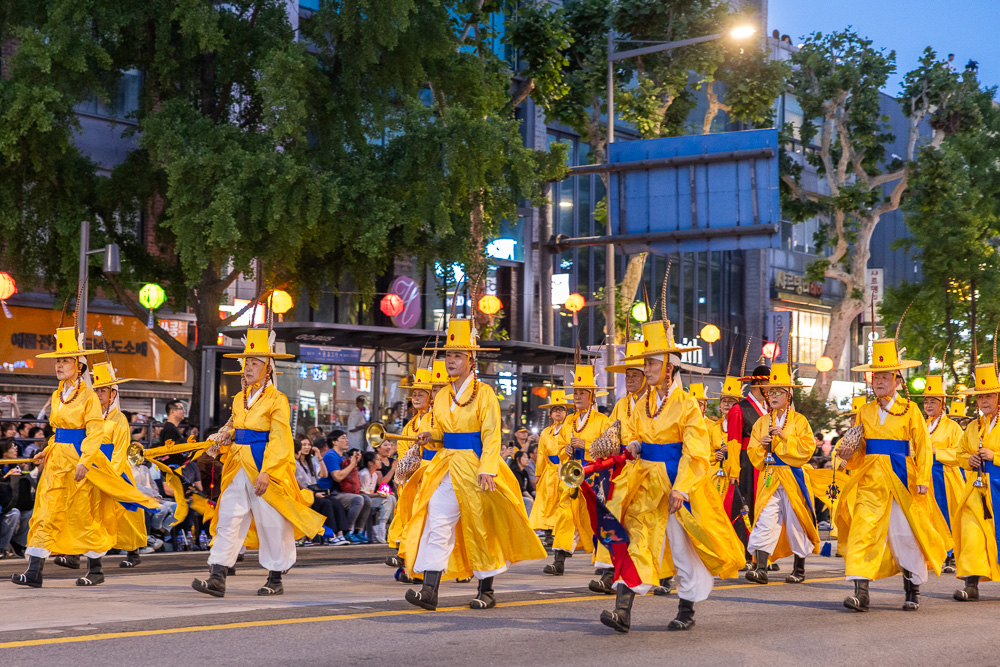
The highlight is the lantern parade, which lasts two and a half hours. In 2026 it took place on Saturday 16 May, from 7 pm to 9:30 pm, from Heunginjimun Gate along Jongno street to Jogyesa. Thousands of participants in hanbok carry illuminated lanterns shaped like lotus flowers, dragons, fish and elephants. That year, even humanoid robots joined the procession.


Jogyesa Temple
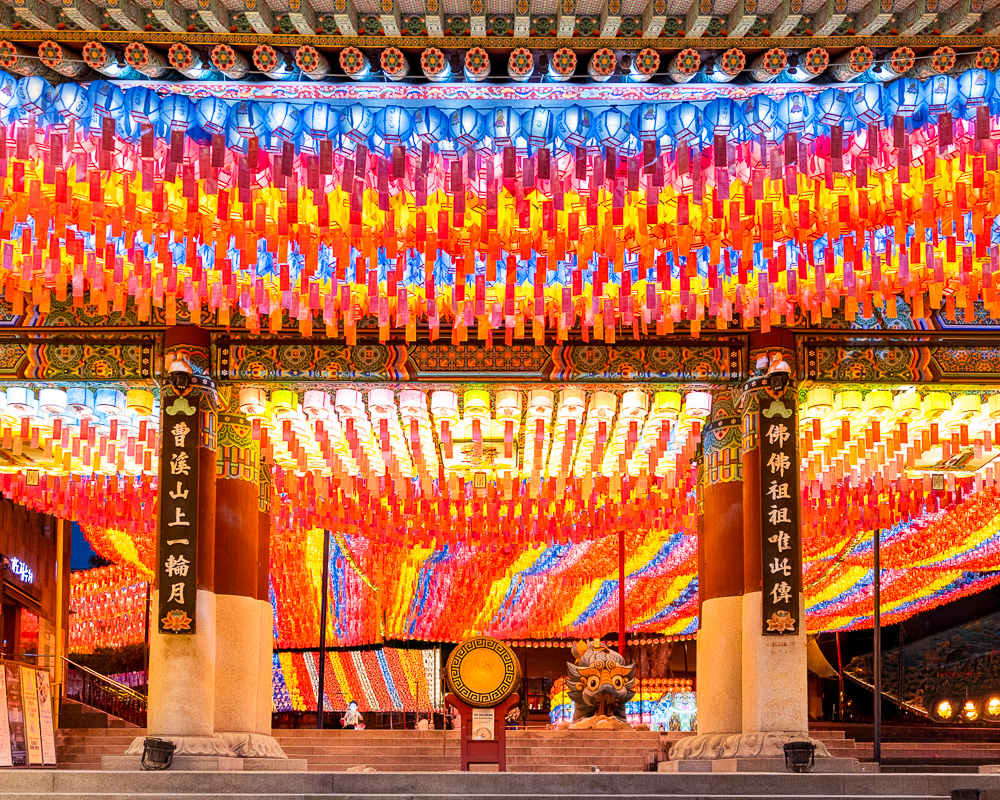
Jogyesa, the head temple of the Jogye Order, sits in the heart of Seoul. During the festival, thousands of lanterns form a multicoloured ceiling above its courtyard. The day after the parade, the street in front of the temple hosts traditional crafts, music and dance performances.


Gyeongju: Bulguksa Temple decked with lanterns
In Gyeongju, the former Silla capital, Bulguksa Temple also dresses up for Buddha’s birthday. Its courtyards, already listed by UNESCO, fill with rows of lanterns. Go early in the morning, before the tour groups, to photograph the courtyards empty. I describe the temple in detail in my article South Korea: 9 UNESCO Sites and My 15-Day Itinerary.

Busan: Samgwangsa Temple and its 40,000 lanterns
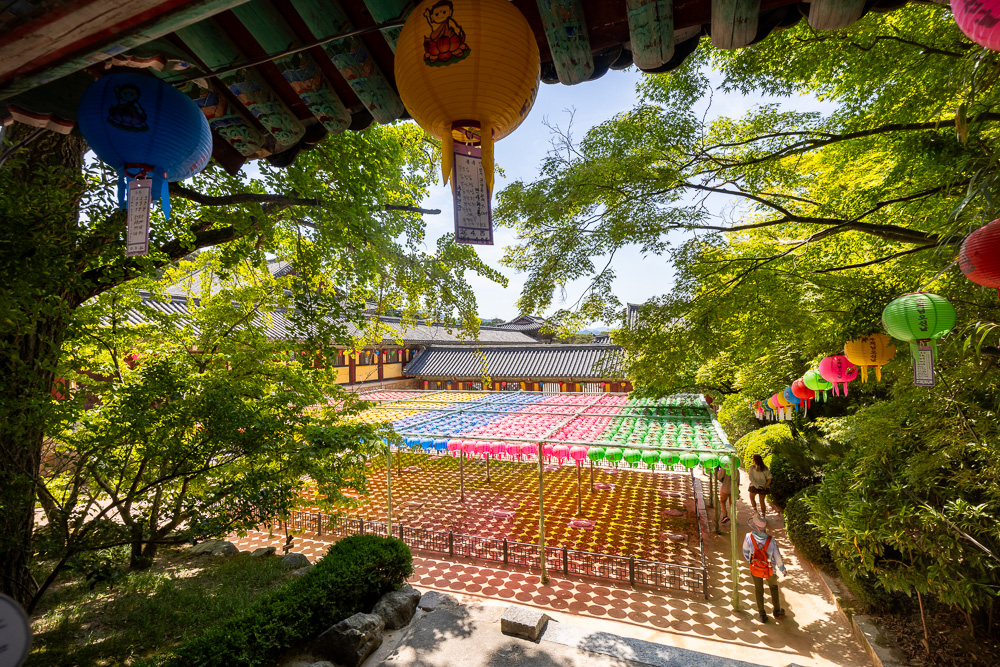
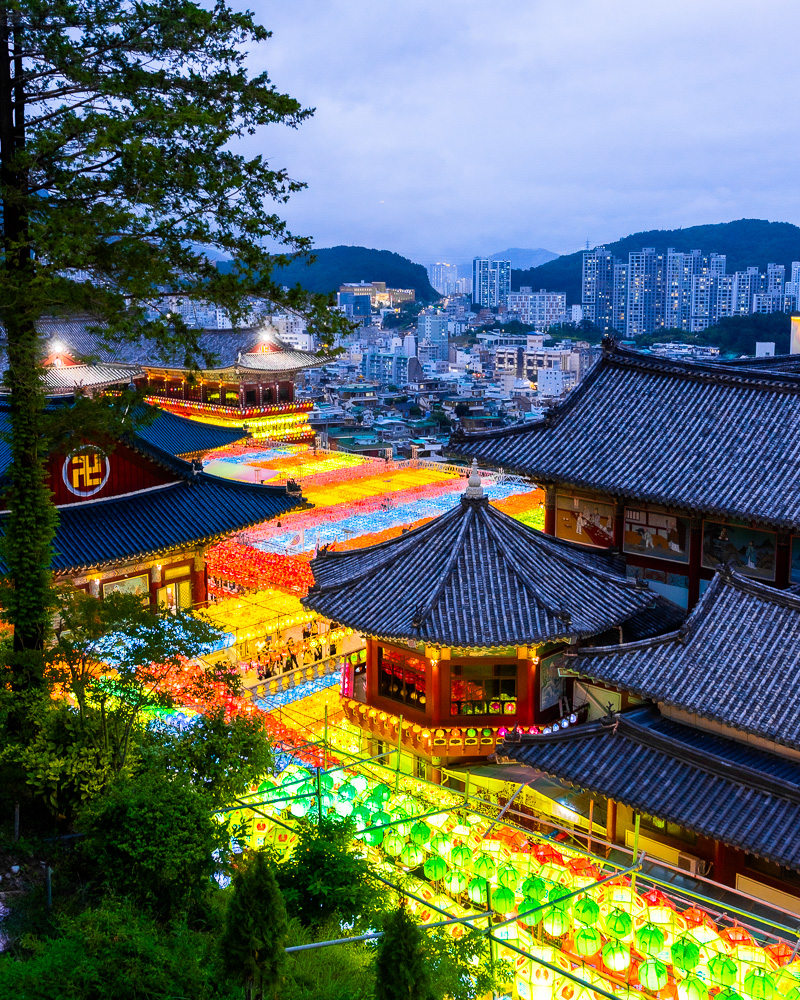
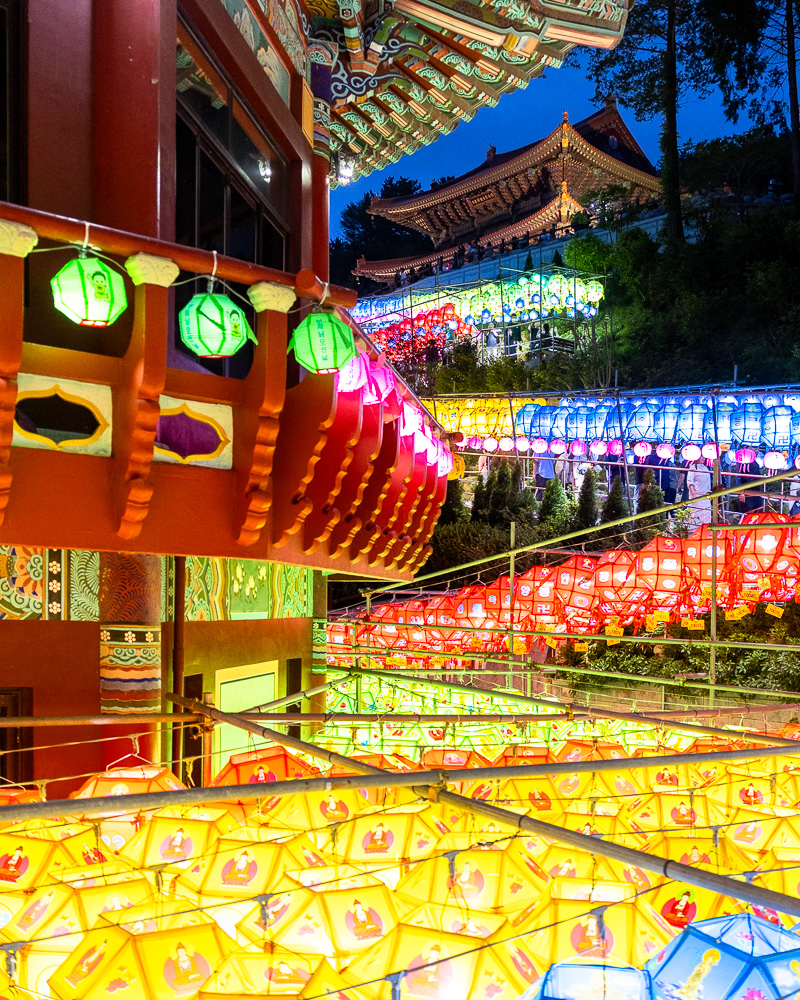
During the festival, Samgwangsa Temple (삼광사), in the hills of Busan, is the most spectacular temple in South Korea: more than 40,000 lanterns cover its courtyards and stairways. In 2026, the festival ran from 15 to 24 May, ending on Buddha’s birthday, and the lanterns were lit every evening from around 7 pm.
Arrive before nightfall to find your framing from the upper terraces, then wait for the lanterns to light up. From Seomyeon, the Busanjin-gu green bus 15 takes about 15 minutes. For the rest of the city, see my Busan guide.
When is the Lotus Lantern Festival?
Buddha’s birthday falls on the 8th day of the 4th lunar month, so between late April and late May depending on the year. The big Seoul parade takes place on the weekend before. In 2026, the parade was on 16 May and Buddha’s birthday on 24 May. Check the dates on the official Seoul tourism website before booking.
Photo Tips
Best times to take photos
- Blue hour, when the sky still has colour and the lanterns are lit
- The start of the parade, before the crowds get too dense
- Early morning at Bulguksa, before the tour groups
Photo spots
- Along the barriers on Jongno: arrive at least an hour early
- The lantern canopy at Jogyesa, from the edge of the courtyard
- The upper terraces of Samgwangsa
Photo gear to bring
- A bright lens (f/1.8 to f/2.8) and a shutter speed around 1/125 s to freeze the parade without too much noise
- A wide-angle lens for the lantern canopies
- A light tripod for Samgwangsa, if allowed: temples get very crowded
Practical information
- Price: the parade and the temples are free.
- Crowds: the parade draws huge crowds. Plan for full subway trains around Jongno and Jonggak stations.
- Respect: these are religious celebrations. Keep quiet in the temples and don’t stand in front of people praying.
- Seoul to Busan: about 2h15 to 2h30 by KTX.
- Entry: French citizens are exempt from the K-ETA until 31 December 2026; fill in the e-Arrival Card online before you land.
More from South Korea
- 15 Days in South Korea: My Day-by-Day Itinerary
- South Korea: 9 UNESCO Sites and My 15-Day Itinerary
- South Korea in Autumn: Fall Foliage from Seoul to Busan
- Things to Do in Seoul: Palaces, City Wall and Glass Towers
- Things to Do in Busan: Gamcheon, Haeundae and Samgwangsa
See all my articles in the South Korea section.
FAQ
When is the Lotus Lantern Festival in Seoul?
Around Buddha’s birthday, between late April and late May depending on the lunar calendar. In 2026, the Seoul lantern parade took place on 16 May.
Where does the lantern parade take place?
On Jongno street in Seoul, from Heunginjimun Gate to Jogyesa Temple, from 7 pm to 9:30 pm.
Is the Lotus Lantern Festival free?
Yes: the parade, the lantern exhibitions and the temples are free.
When is the Samgwangsa lantern festival in Busan?
In 2026 it ran from 15 to 24 May, with the lanterns lit every evening from around 7 pm.
Is the Lotus Lantern Festival a UNESCO heritage?
Yes: Yeondeunghoe has been on UNESCO’s list of Intangible Cultural Heritage since 2020.
See all
My latest adventures


Alpes-de-Haute-Provence The Gorges of the Verdon ›
January 2024