 EN
 FR


› Blog/travel
November 2026 |
Harbin Ice Festival, China: Ice and Snow World and the City, a Photographer’s Guide
Every winter, Harbin, in northeast China, becomes the world capital of ice and snow: the “Ice City” hosts the Harbin International Ice and Snow Festival, known as the Harbin Ice Festival. I went in January 2026 at the invitation of the China National Tourist Office, alongside some thirty European content creators. Here is what I saw and photographed at Harbin Ice and Snow World and in the city, my day-by-day itinerary and how to get there from Beijing.
Harbin Ice and Snow World
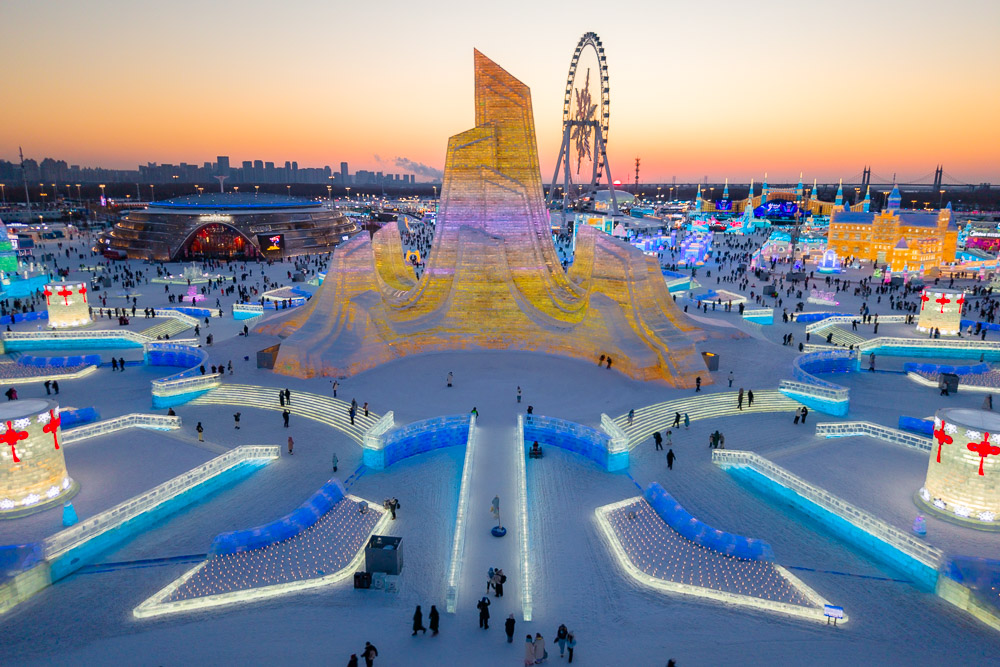
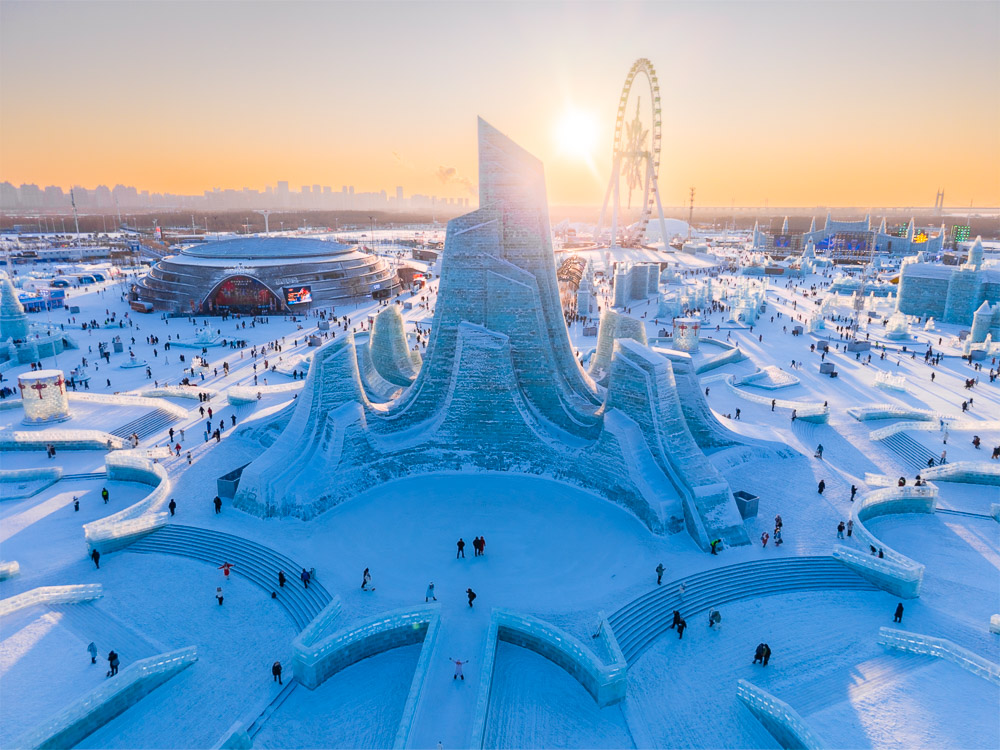
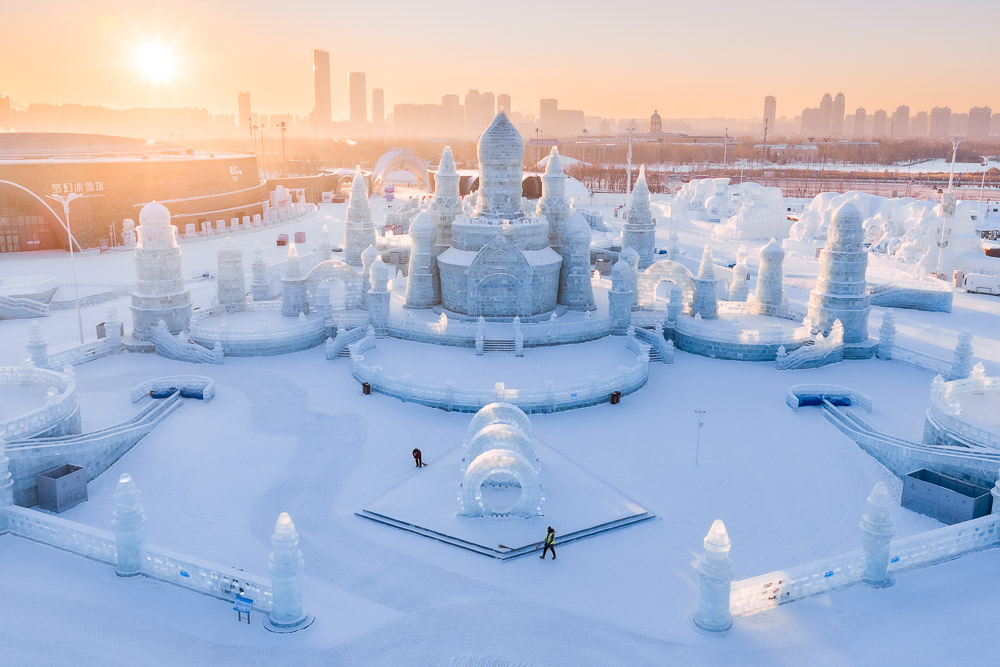
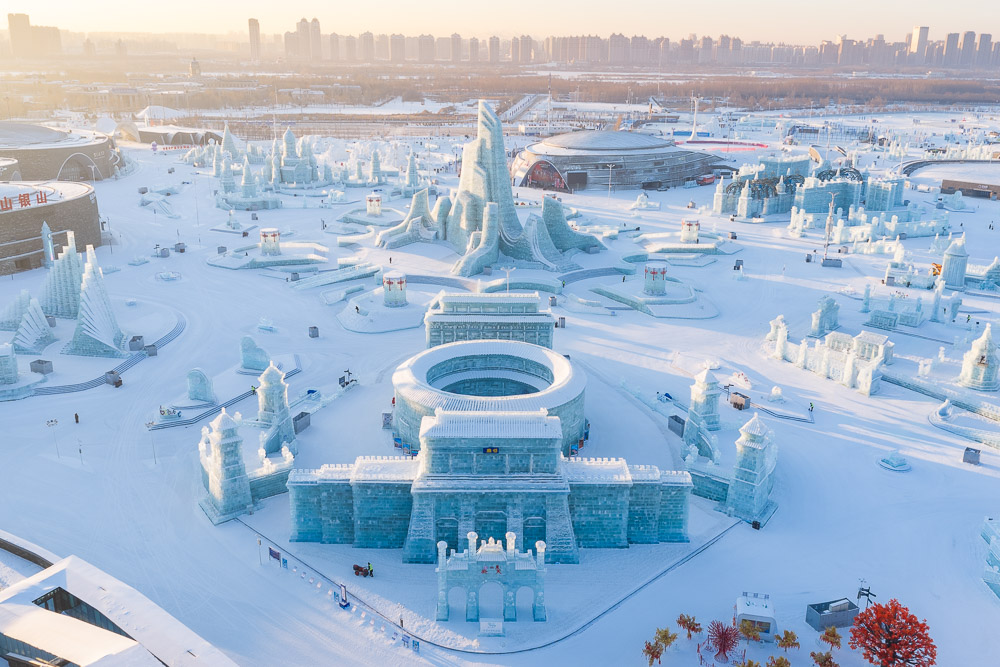
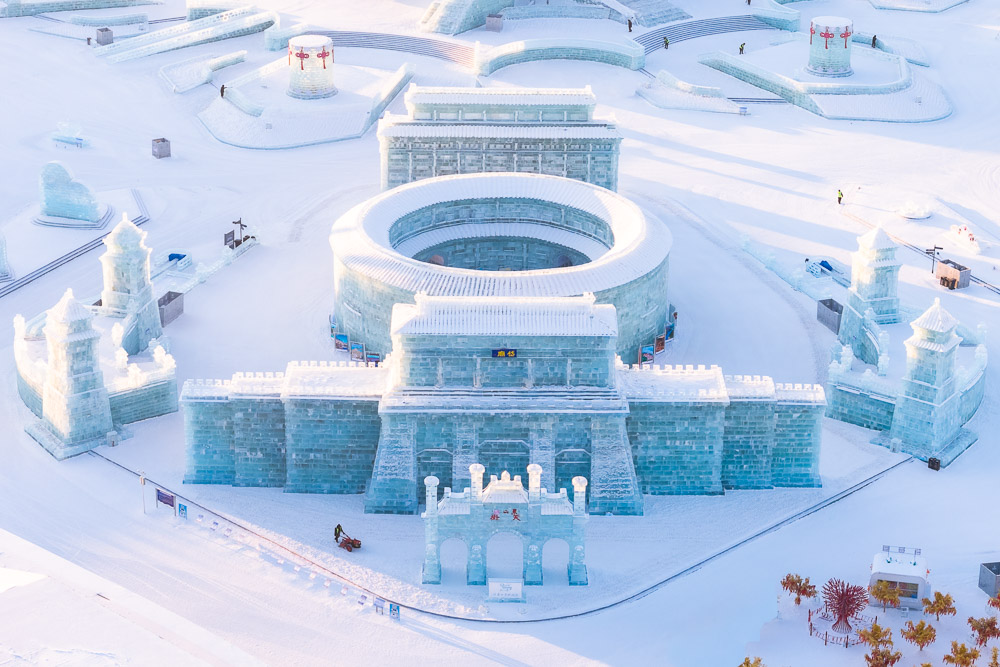
Harbin Ice and Snow World (哈尔滨冰雪大世界) is the largest ice and snow theme park in the world. Its 27th edition opened on 17 December 2025 and covered a record 1.2 million m², built from more than 400,000 m³ of ice and snow.
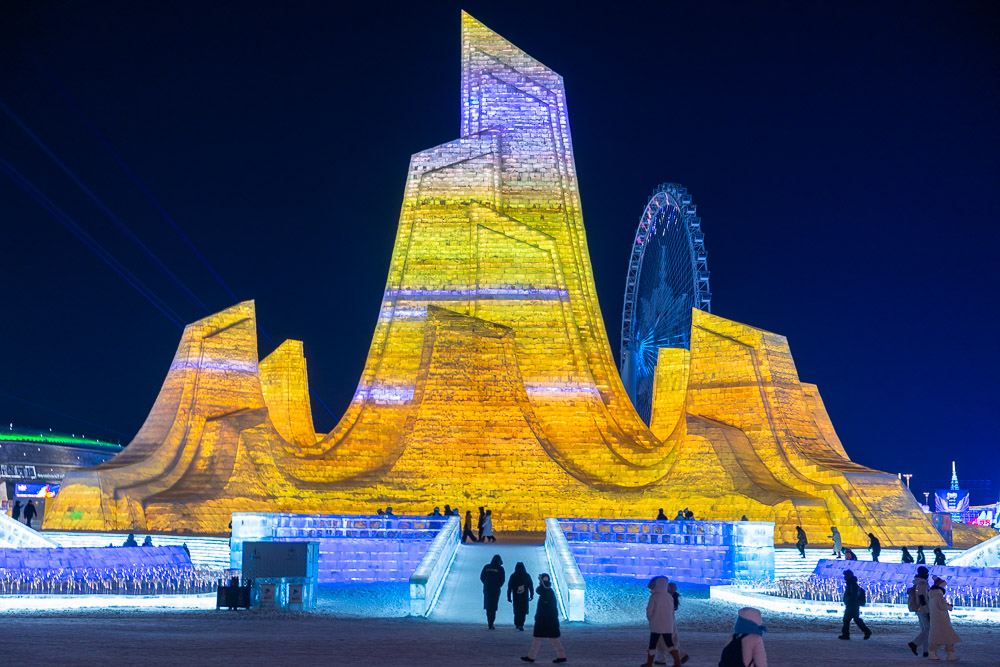
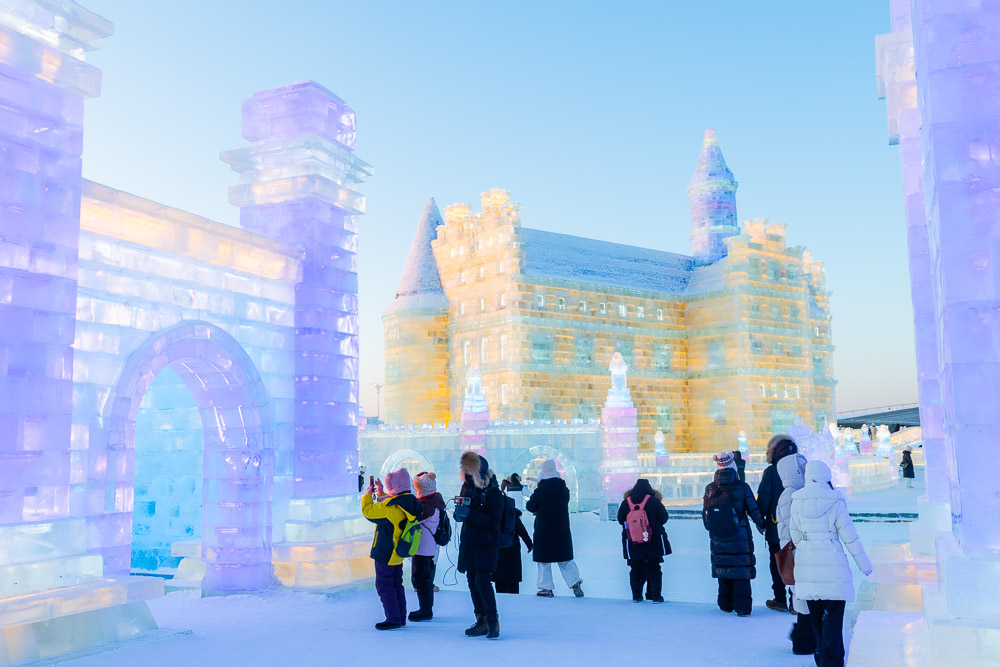
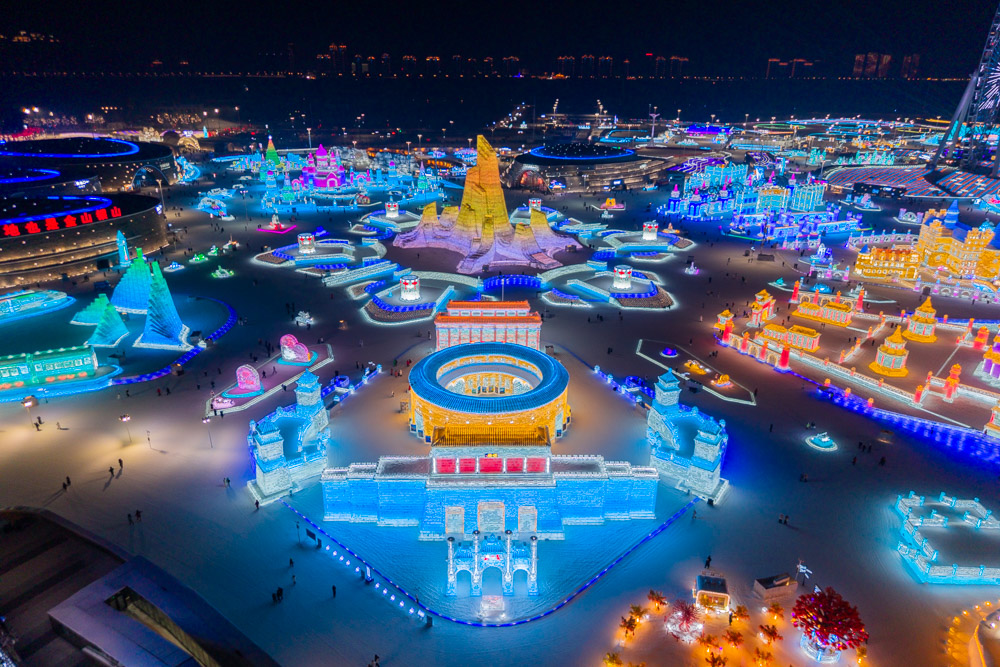
The ice blocks are cut from the frozen Songhua River and laid like bricks. Castles, pagodas, towers and even a full-size high-speed train are lit from inside by LEDs. By day the park is white and blue; after dark it turns yellow, pink and purple.
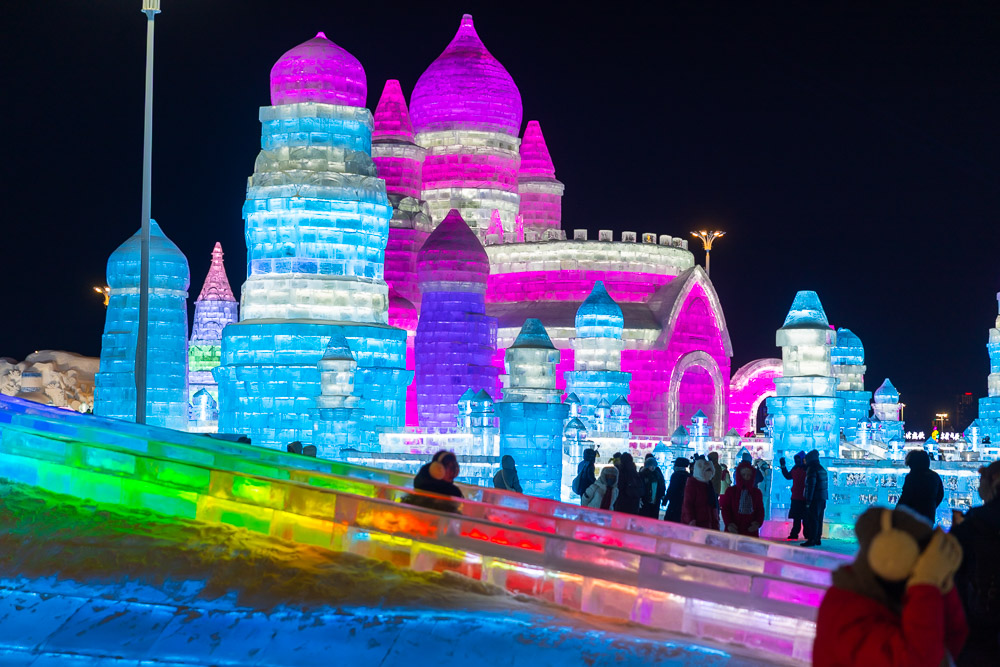
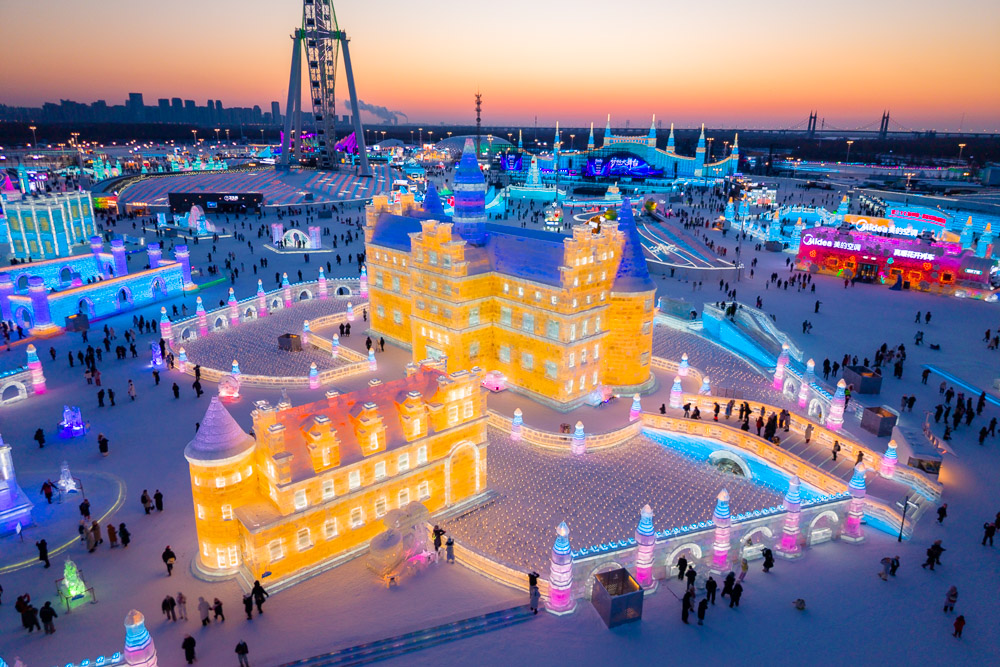
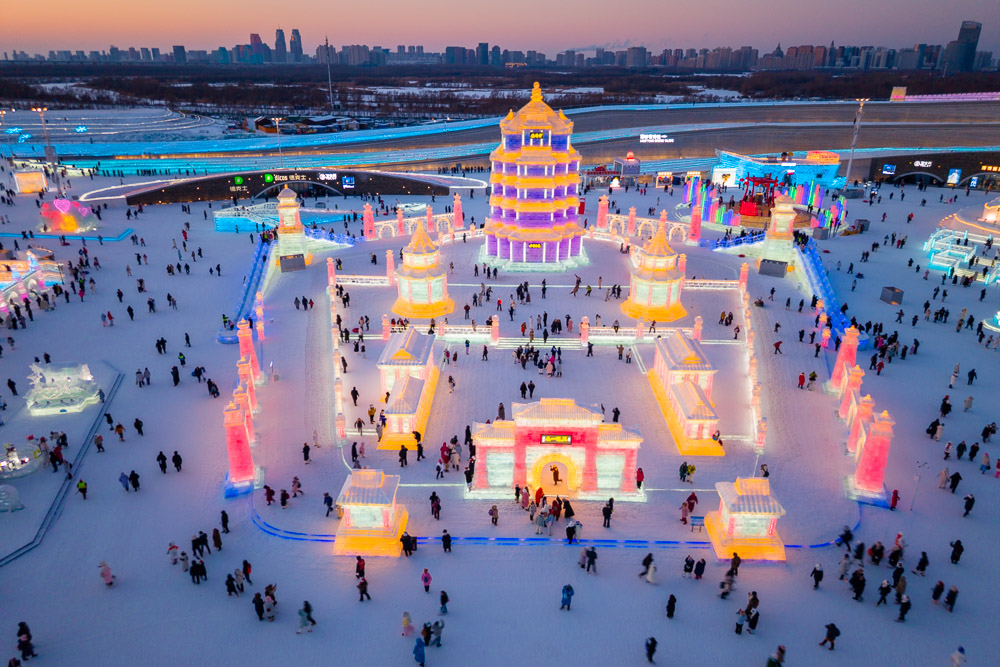
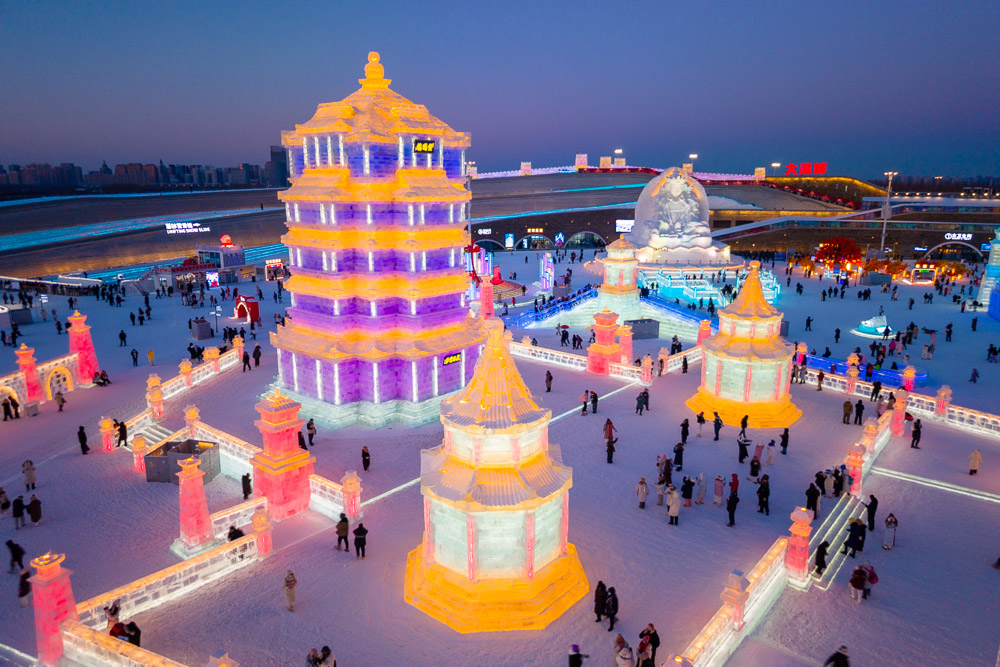
My photo tips:
- Arrive around 3 pm. You get the low winter light, sunset around 4:30 pm in January, then blue hour, when the lighting looks its best.
- Allow 4 to 6 hours: the site is huge.
- The big ice slides are booked separately, for free, in the park’s app. They are not included in the ticket.
- Get some height: the Ferris wheel and aerial views reveal the park’s star-shaped layout around the central sculpture.
- Keep your batteries warm in an inside pocket. At –20 °C they drain in minutes.
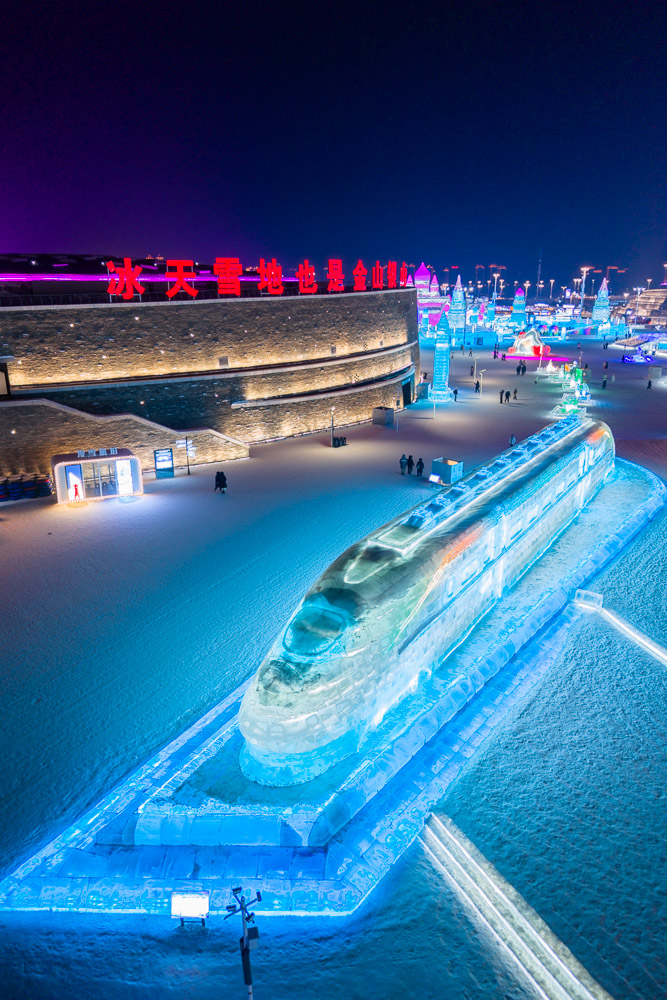
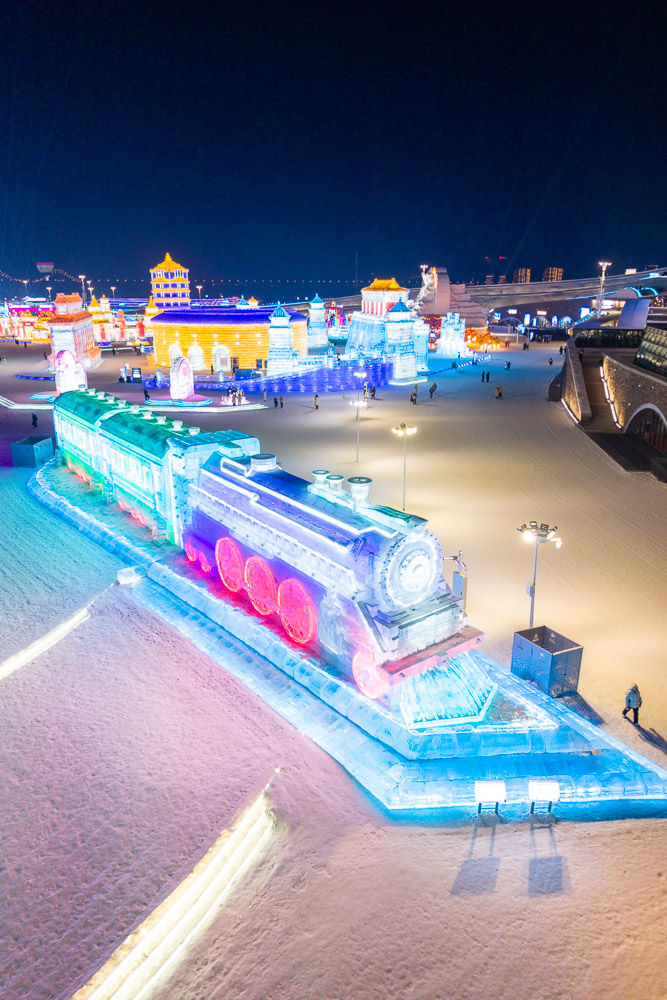
Ticket: 328 yuan (about US$46) per adult, 298 yuan in the opening week. Hours: 10 am – 9:30 pm. Note that the 2025-2026 edition closed early, on 21 February 2026, after a warm spell. January is the safest month.
Sun Island and its snow sculptures
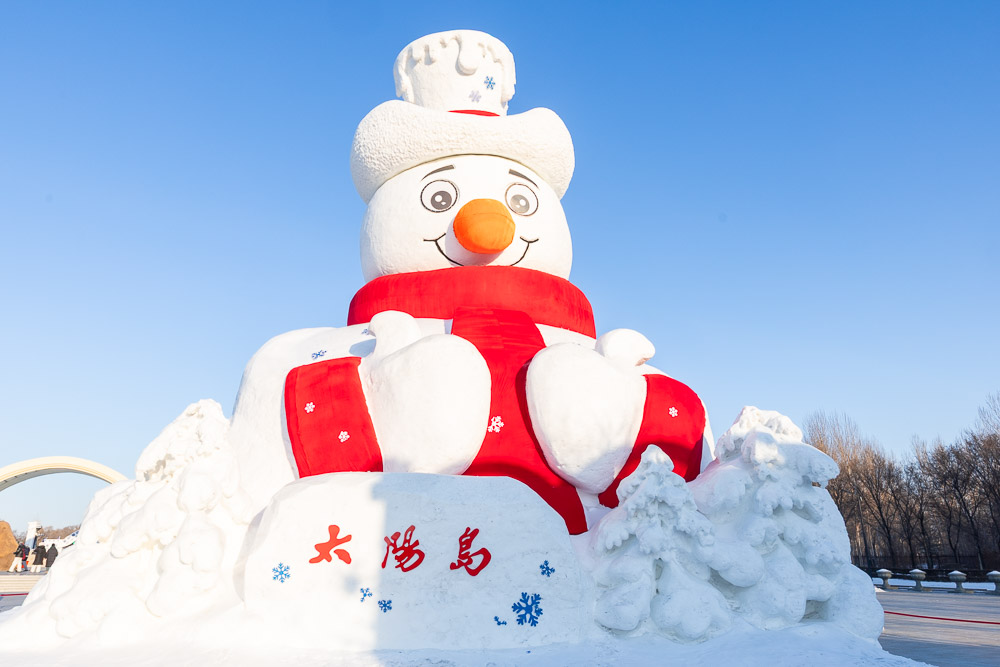
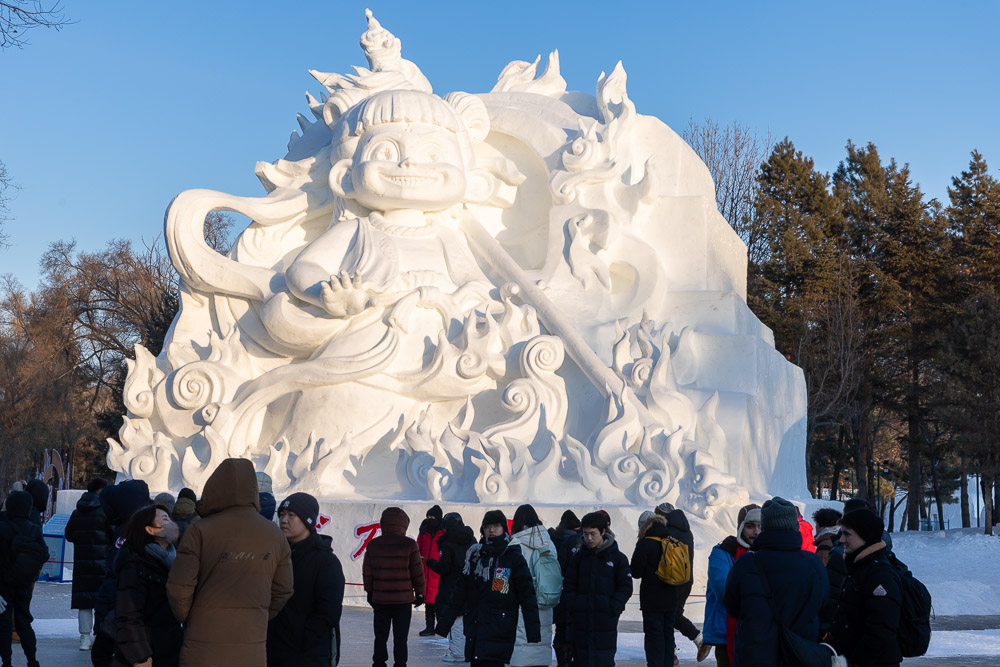
Across the Songhua River, the Sun Island International Snow Sculpture Art Expo (太阳岛雪博会) is the white counterpart to Ice and Snow World. Its 38th edition covered 1.5 million m², with 260 sculptures carved from 120,000 m³ of snow.
The star is “Mr Snowman”, a 23.8-metre snowman. Next to it, monumental sculptures depict heroes of Chinese mythology such as Nezha. Go in the early afternoon: carved snow shows its detail best in side light under a blue sky.
The city: Central Street and St Sophia Cathedral
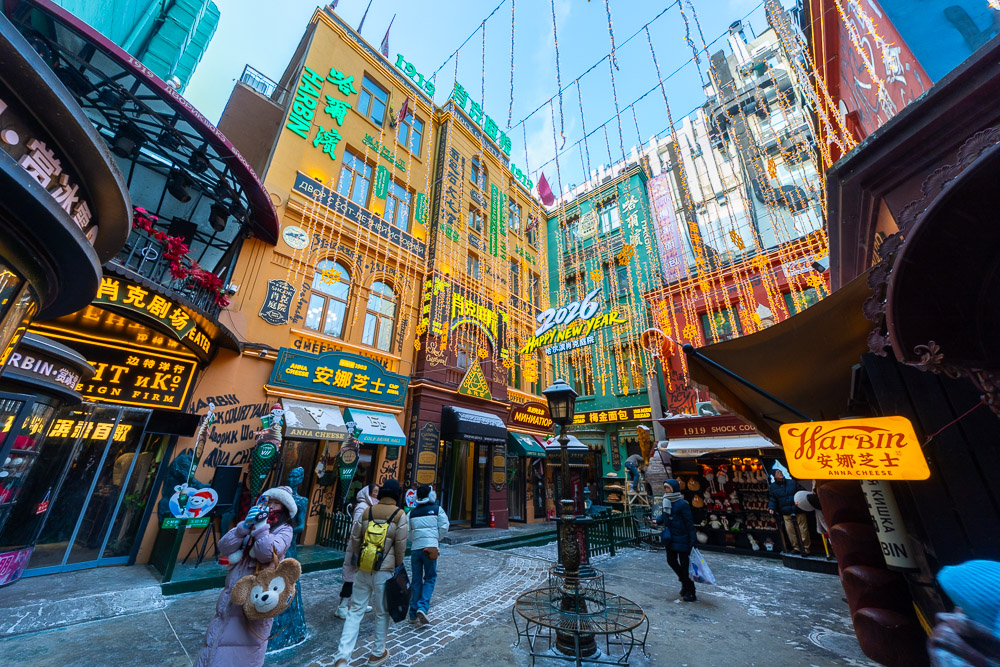
Harbin was founded in 1898 with the railway built by Russia. That history still shows in its facades, onion domes and Cyrillic shop signs.
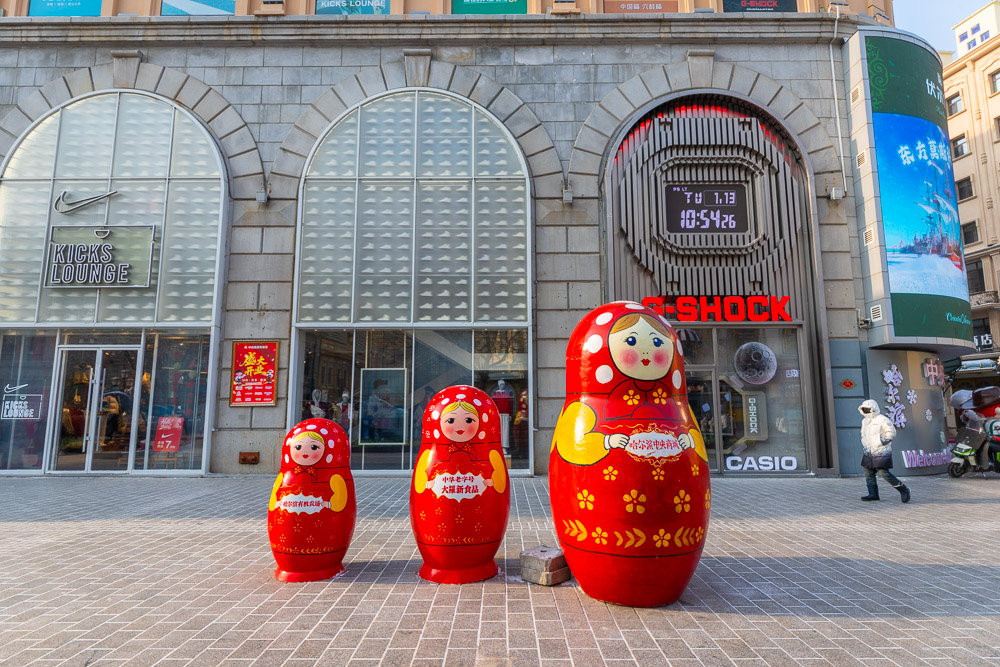
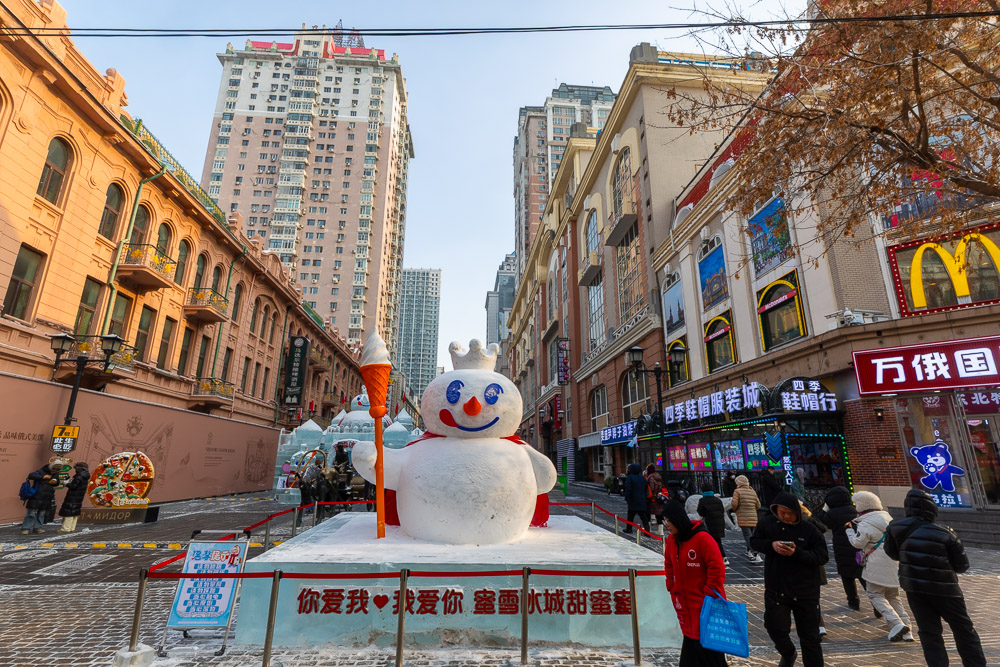
- Central Street (Zhongyang Dajie, 中央大街): a 1,450-metre cobbled pedestrian street laid out in 1898. Expect Art Nouveau and baroque facades, giant matryoshka dolls, Russian goods shops and the famous Modern ice lolly, eaten outdoors even at –20 °C.
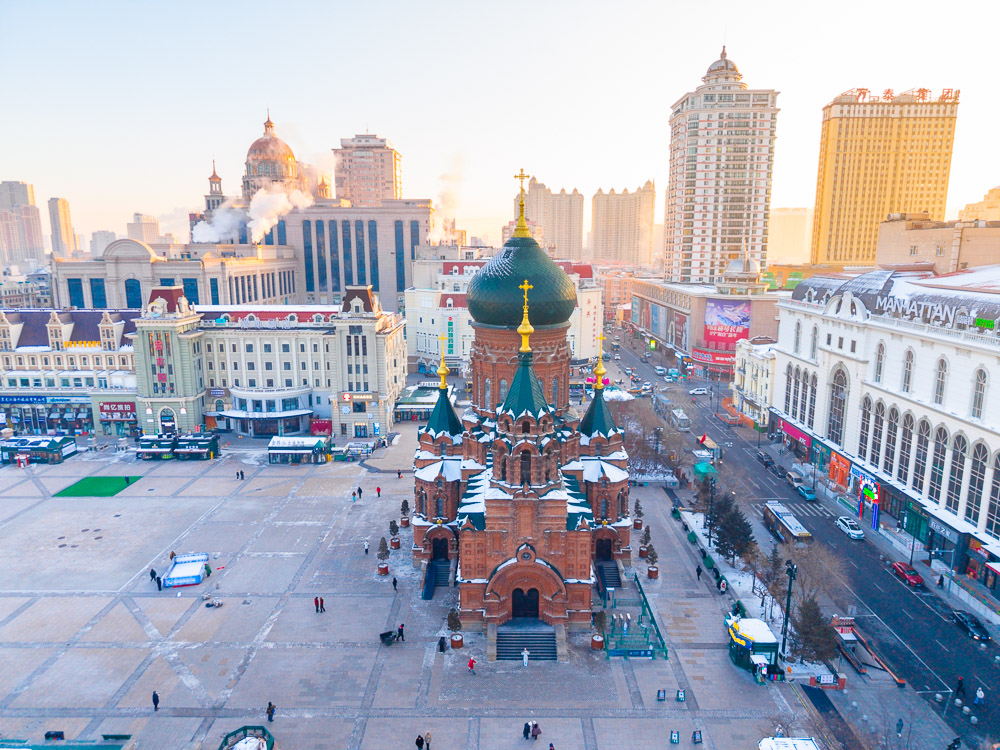
- St Sophia Cathedral (圣索菲亚教堂): a former Russian Orthodox church built in 1907 and completed in its current form in 1932, 53 metres tall. It now houses an architecture gallery. Shoot it early in the morning, when the square is empty and the light warms the brick.
- The Chinese Baroque quarter (Lao Daowai): courtyards and facades blending Chinese motifs with European architecture, best photographed in the evening when the lanterns come on.
My itinerary: 4 days in Harbin
- Day 1: arrival via Beijing, flight to Harbin and hotel check-in.
- Day 2: morning photo walk on Central Street; afternoon and evening at Harbin Ice and Snow World.
- Day 3: Sun Island snow sculptures, then a show at the Harbin Grand Theatre in the evening.
- Day 4: a day of skiing near Harbin for immersive footage, then the Chinese Baroque quarter at sunset.
If you don’t ski, swap day 4 for the Siberian Tiger Park, a semi-wild park you tour by vehicle, and Harbin Polarland.
How to get from Beijing to Harbin: train or plane
| High-speed train | Flight | |
|---|---|---|
| Stations / airports | Beijing Chaoyang → Harbin West | Beijing Capital (PEK) or Daxing (PKX) → Harbin Taiping (HRB) |
| Duration | 4h33 for the fastest, usually 5 to 6 hours | about 2 hours in the air |
| Typical fare | about 600 yuan in second class | 600 to 1,500 yuan depending on the date |
| Frequency | around twenty G trains a day | around twenty flights a day |
My advice: take the train. It runs city centre to city centre, you watch the snowy plains of the Northeast roll by, and snow delays trains less often than flights. Your passport is your ticket: book on the official 12306 app or on Trip.com. Flying makes sense if you connect in Beijing from Europe. Classic overnight trains also run the route (about 11h40).
Practical information
- When to go: late December to mid-February. January is the safest month for the ice.
- Temperatures: around –17 °C on average, dropping below –30 °C.
- What to pack: thermal base layers, a long down coat, non-slip snow boots, thin gloves under mittens, heat packs and a power bank. On domestic flights, power banks must carry the Chinese 3C certification.
- Entry: check visa rules for your nationality. French citizens can enter China visa-free for up to 30 days until 31 December 2026.
More from China
See my photos from China 2008 to 2011, when I lived in Shanghai, and all my articles in the China section.
FAQ
When is the Harbin Ice Festival?
The Harbin International Ice and Snow Festival runs from late December to late February. The 27th Harbin Ice and Snow World opened on 17 December 2025 and closed on 21 February 2026.
How much is a ticket to Harbin Ice and Snow World?
328 yuan per adult for the 2025-2026 edition, about US$46.
How long does it take to get from Beijing to Harbin?
4h33 to 6 hours by high-speed train from Beijing Chaoyang station, about 2 hours by plane.
How many days do you need in Harbin?
Three to four days: one for Ice and Snow World, one for Sun Island, one for the old town, and one for skiing or the tiger park.
How cold is Harbin in January?
Around –17 °C on average, with nights below –30 °C.
See all
My latest adventures

Alpes-de-Haute-Provence The Gorges of the Verdon ›
January 2024

Japan Okinawa Island : Polynesia of Japan ›
March 2021


Quebec Quebec in winter : Charlevoix and Saguenay ›
February 2021

France Top photo spots in Paris under the snow ›
January 2021

New-York Top 10 photo spots in New-York at Christmas ›
December 2020

Russia Top 10 photo spots in Moscow at Christmas ›
December 2020


